21 Maggio 2019 –
Di Alberto Crivelli, Country Manager di A10 Networks Italia—
Oggi sentiamo parlare molto di rete 5G, senza però conoscerne esattamente le caratteristiche che la differenziano dalle precedenti reti 4G e 3G. Si tratta, della rete mobile di nuova generazione, le cui principali prestazioni sono l’alta velocità nella trasmissione dei dati, la ridotta latenza, il risparmio energetico, la riduzione dei costi, le maggiori performance del sistema e la capacità massima di connettività del dispositivo. In particolare, mentre il 3G e il 4G sono le tecnologie che hanno portato internet ai nostri smartphone, consentendoci la connessione in qualsiasi momento, il 5G è stato pensato appositamente per le soluzioni IoT. Con il 5G, la rete mobile avrà infatti la potenza per gestire milioni di piccoli dispositivi sempre connessi che genereranno una incredibile mole di dati da analizzare nei sistemi in cloud. In sintesi, potremmo affermare che mentre la rete 4G LTE è stata l’evoluzione a lungo termine della rete RAN (Radio Access Networks), il 5G ne rappresenta oggi l’ulteriore evoluzione, comportando un notevole aumento della larghezza di banda con prestazioni end-to-end avanzate ed orientate ad amplificare l’utilizzo di soluzioni hi-tech nelle industrie, i servizi smart city e molto altro ancora.
Ma le straordinarie promesse del 5G sono accompagnate anche da nuove sfide. Rendere tutto costantemente connesso ne aumenta prestazioni, rendimento e controllo, ma espone ogni attività al rischio dei cyber attack. Mettere online le funzioni chiave di una struttura significa dover trovare un modo per proteggerle sia da chi vuole prenderne il controllo, sia da chi vuole semplicemente renderle inutilizzabili. Inoltre, garantire la sicurezza informatica non è l’unico punto critico per le reti 5G. Anche la sola copertura del segnale potrebbe diventare una vera criticità per gli operatori. Le frequenze usate, infatti, sono ideali per il trasferimento ad altissima velocità dei dati, ma risultano essere meno adatte agli ambienti complessi ed affollati delle nostre città. Gli esperti confermano infatti che serve un numero elevato di antenne per coprire adeguatamente una città e per questo i produttori stanno preparando apparati che potranno essere incorporati ovunque: dai lampioni alle pareti dei palazzi, fino ai semafori e qualsiasi altro possibile “punto di appoggio”. Il problema della scarsa penetrazione e capacità di rimbalzo delle onde radio usate dal 5G porterà a costi molto elevati nella creazione dell’infrastruttura che dovrebbe far diventare smart le nostre città e la stessa domanda per assicurare efficienza, larghezza di banda e copertura maggiori sta spingendo i carrier verso un modello di distribuzione centralizzata, che li sta portando ad investire miliardi di dollari nello sviluppo delle loro reti mobili per garantire più valore all’utente finale.
The virtualization of the network is still at an early stage
La necessità di rendere le reti sempre più veloci e meno costose spinge costantemente i service provider a monitorare e riesaminare l’evolversi della tecnologia in modo da individuare innovazioni e possibili miglioramenti. Negli ultimi anni, in modo particolare, hanno concentrato la loro attenzione principalmente sulle aree della Network Function Virtualisation (NFV) e della Software Defined Networks (SDN), ed i miglioramenti ottenuti a livello di virtualizzazione stanno guidando il passaggio dall’hardware alle soluzioni software. La SDN è molto promettente, ma non può essere ritenuta una panacea poiché un hardware appositamente sviluppato rimane pur sempre la scelta preferita. La NFV e la SDN hanno tuttavia offerto ai service provider un’ottima alternativa ai vecchi metodi che prevedevano dispositivi appositi, che spesso rimanevano inutilizzati. L’era della virtualizzazione rimane al momento in una fase iniziale, nonostante i fornitori di hardware e i service provider scommettano da tempo sul suo successo. Lo sviluppo del software invece, prosegue per soddisfare le richieste di soluzioni integrate, facilmente scalabili e che consentano la riduzione dei costi operativi.
Opportunities for billions of dollars with the 5G network
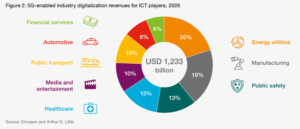
Viene comunque spontaneo chiedersi se è giusto tutto questo clamore che circola da mesi sull’avvento della rete 5G. Siamo appena all’inizio del processo, ma dalle varie attività riscontrate da produttori e provider di servizi di connessione, la risposta non può che essere affermativa. Secondo Ericsson, le tecnologie 5G apriranno infatti a più di 1,200 miliardi di dollari di opportunità entro il 2026. La rete 5G garantisce la possibilità di maggiore connettività e flessibilità, dispiegando quindi il suo impatto non soltanto su carrier ed operatori delle reti mobili, ma anche su altri settori industriali che si sono abilitati alle tecnologie 5G.
Nel grafico qui riportato è possibile osservare una lista dei settori abilitati al 5G e dei ricavi previsti per ciascuno.
5G, la rivoluzione dell’infrastruttura di rete
Per comprendere l’impatto rivoluzionario che la rete 5G avrà nei prossimi anni, basti pensare alla rivoluzione che il trasporto ferroviario ha comportato a livello mondiale. Si è trattato infatti di un cambiamento epocale che ha modificato quelle che erano le infrastrutture fino ad allora esistenti e ha permesso lo sviluppo di nuovi modelli di business. Le ferrovie, in altre parole, hanno permesso la realizzazione di una vasta rete che collega parti molto distanti tra di loro, dando la possibilità a persone e merci di muoversi in tempi sempre più veloci e aprendo così a nuove opportunità di business. Le reti mobili ed internet vanno ormai ben oltre ai benefici offerti dalle reti ferroviarie, perché non soltanto incrementano lo scambio dei beni, ma aumentano anche i vantaggi in termini di servizi aggiuntivi. Le motivazioni che oggi spingono l’evoluzione della rete non si basano su un’infrastruttura cablata o wireless e le aziende sono sempre più focalizzate sull’aggiornamento delle reti mobili esistenti. Allo stesso tempo, i promotori dei sistemi NFV, SDN e IoT stanno spingendo per poter utilizzare la nuova generazione di rete mobile. Il passaggio dall’ideazione alla produzione di soluzioni software è più semplice e molte volte prevede un costo di investimento iniziale inferiore rispetto ad altre soluzioni. Tutto ciò contribuisce a soddisfare ancora di più le esigenze dei service provider, inclusa l’infrastruttura cablata. 5G e IoT saranno guidati dalla domanda, quindi più l’infrastruttura si espanderà per soddisfare tale richiesta, maggiori saranno le opportunità che ne conseguiranno. Si tratterà sostanzialmente di un ciclo di feedback positivi che rivoluzionerà il nostro modo di pensare ed usare internet e la rete mobile.