Newly released survey finds that companies lose hundreds of thousands of euros due to data security breaches
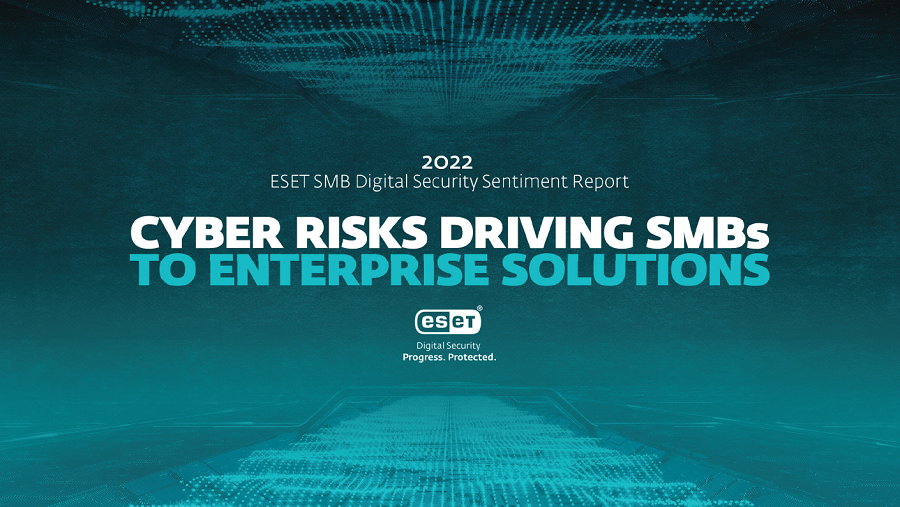
ESET, a global leader in the cybersecurity market, today released the 2022 SMB Digital Security Sentiment Report, created by interviewing over 1,200 cybersecurity managers from small and medium-sized businesses (SMBs) in Europe and North America. The report explores cybersecurity sentiment in the broader context of recent security developments and global events impacting SMBs' perceptions of security.
According to the data collected, over two thirds of SMEs have suffered a data security incident in the last 12 months, with an estimated average damage of almost 220,000 euros.
However, the top concern about the economic repercussions of a cyberattack was data loss (29%). While decision makers are concerned about the possible implications of an attack, 70% of companies surveyed admitted that investments in cybersecurity have not kept pace with recent changes in operating models (e.g. hybrid working).
The latest results from the ESET Threat Report show a 20% increase in threat detections in 2022 compared to the previous year. As many as 83% of companies surveyed believe that “cyber warfare is a very real threat that can impact everyone,” which suggests that the increase in threats is significantly impacting SME sentiment. Additionally, 74% of SMBs in North America and Europe believe they are more vulnerable to cyber attacks than enterprise companies.
Respondents indicated the following top cybersecurity concerns for the next 12 months:
Malware (70% overall, with a statistically significant difference in Sweden of 50%)
Web attacks (67% in total, with a statistically significant difference in Spain of 87%)
Ransomware (65% overall, with a statistically significant difference in Denmark of 80%)
Security issues of third parties (64%)
Attacks denial-of-service distributed (60%)
Remote Desktop Protocol Attacks (60% in total, with a statistically significant difference recorded in Spain, equal to 79%).
It is not surprising, therefore, that the SMEs' overall confidence in cyber resilience for the next 12 months will remain at low levels, with only 48% of respondents reporting they are moderately or very confident in their cyber resilience. It is worth noting that Scandinavian respondents' trust (32%) was significantly lower than that of the rest of Europe and North America (both at 49%).
Despite major global events, such as the war in Ukraine and the continuation of remote working arrangements post-COVID-19, SMEs identified the number one factor increasing the risk of cyber attacks as their employees' lack of cyber awareness (43%). Other important factors include attacks by nation states (37%), vulnerabilities in the partner/supplier ecosystem (34%), continued hybrid working (32%) and use of the Remote Desktop Protocol (31%).
Read more about SMB Digital Security Sentiment Report 2022 at this link