The Italian Public Cloud and the Department of Informatics, Bioengineering, Robotics and Systems Engineering of the University of Genoa have signed an agreement for R&D and technology transfer activities
Netalia, the independent Italian Public Cloud Service Provider, and the Department of Informatics, Bioengineering, Robotics and Systems Engineering (DIBRIS) of the University of Genoa have signed a three-year collaboration agreement which provides for the carrying out of joint Research & Development and technology transfer activities.
The main intent of the collaboration is to plan and pool actions aimed at spreading a culture of innovation and promoting research activities aimed at industrial needs and the progress of civil society. At the same time, the initiative focuses on the development of talent, giving qualified young people the opportunity through a high academic training course to apply themselves in the field and fully realize their potential, in contact with an industrial sector with a high rate of specialization and innovation.
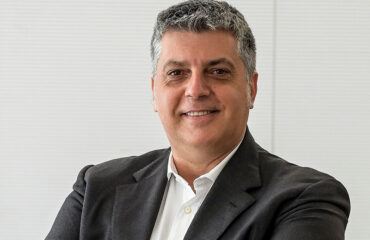
For Netalia this is the logical declination of some founding values, which sees DIBRIS-UniGe as a natural counterpart. “Working as a system, synergistically aggregating national resources capable of contributing to digital development cloud-based it is part of the mindset of Netalia, as well as promoting innovation, research and lifelong learning,” he says Alberto Clavarino, General Manager of Netalia and contact person for the initiative. "We work to support the results of research into entrepreneurial ideas: for us, technology transfer must be ethically oriented to generate added value for society. This is why we are proud to collaborate with a prestigious organization like DIBRIS, academic excellence at a national and international level".
For DIBRIS, the collaboration is part of the so-called "Third Mission" of universities, which aims to develop a set of scientific, technological and cultural transfer activities and productive transformation of knowledge through direct interaction with civil society and the entrepreneurial fabric, in order to promote economic, social and cultural growth starting from best practice international. The Third Mission is to all intents and purposes an institutional mission of universities, alongside the traditional teaching and research mandates.
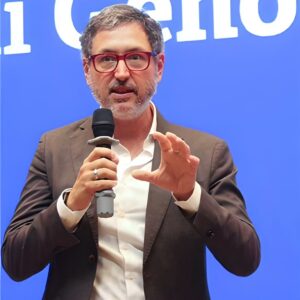 “Being a high-quality reality, but remaining small and isolated, is no longer enough in a global society,” he explains Fulvio Mastrogiovanni, Associate Professor of Robotics and Artificial Intelligence and former Vice Rector for International Relations of the University. "We must aim to create a territorial ecosystem between autonomous and dynamic organizations that present themselves together externally, thus reaching dimensional scales that allow us to compete at a national and international level. It is an excellent moment for these initiatives: there is a lot of excitement and desire for synergies between public and private actors, as perhaps we have never seen. The agreement with Netalia goes in this direction, profitable for everyone".
DIBRIS covers all sectors of information engineering and computational aspects within the University of Genoa, from classical computer science to Artificial Intelligence, from automation to Robotics, passing through the new software development paradigms. Around 300 people work within the department, engaged in experimental and frontier fields. Collaboration with cutting-edge industrial companies from a technological point of view is essential to allow real applications and validation tests, since some research and development activities must necessarily be guided by the market, its needs and evolutions in demand. The Netalia-DIBRIS partnership will allow a mutually beneficial and useful exchange of skills and feedback at a system level, with a foreseeable impact in terms of widespread capabilities, innovative mentality and technologies.