Researchers at Eset, a global leader in the cybersecurity market, have identified ModPipe, a modular malware that gives hackers using it access to sensitive information stored in devices supported by ORACLE MICROS Restaurant Enterprise Series (RES) 3700 POS (point-of-sale) – a management software suite used by hundreds of thousands of bars, restaurants, hotels and other hospitality establishments around the world. Most of the identified targets are located from the United States.
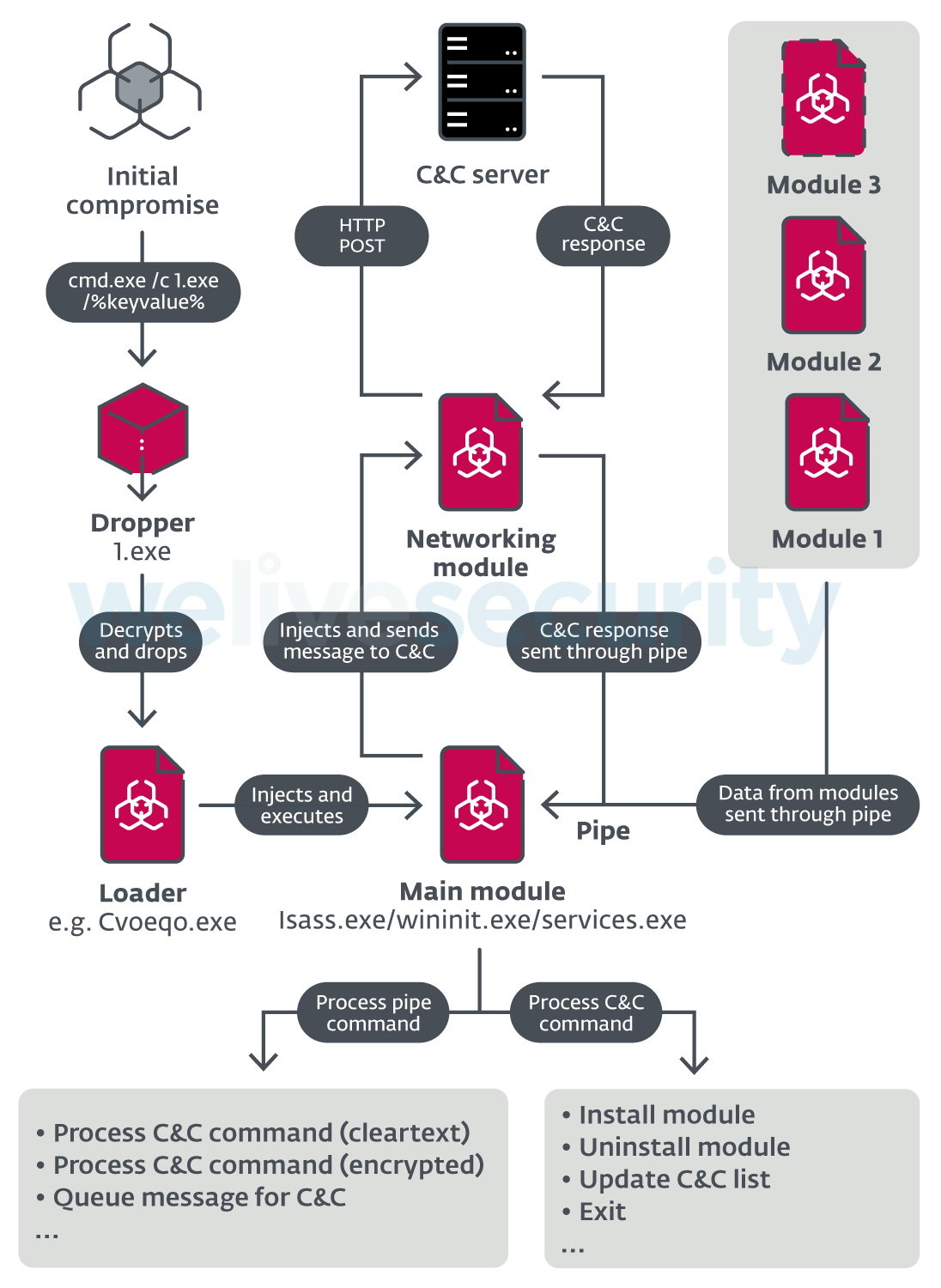
What makes this malware special are the downloadable modules and features, as it contains a customized algorithm to steal the passwords of the RES 3700 POS database, decrypting them from the values of the Windows registry. This demonstrates the in-depth knowledge that the malware authors have of the attacked software, which allows them to choose this sophisticated method instead of collecting data through a simpler but “stronger” approach, such as keylogging. The extracted credentials allow ModPipe cybercriminals to access the contents of the database, including various definitions and configurations, status tables, and POS transaction information.
"However, based on the RES 3700 POS documentation, hackers should not be able to access most sensitive information, such as credit card number and expiration date, which is protected by encryption. The only customer data stored in clear text and therefore available to them should be the name of the card owner." warns Martin Smolár, the ESET researcher who discovered ModPipe.
"Probably the most interesting parts of ModPipe are its downloadable modules. We have been aware of their existence since late 2019, when we discovered the malware and analyzed its basic components," explains Smolár.
The downloadable forms are:
- GetMicInfo targets data related to MICROS POS, including passwords tied to the two manufacturer-defined username databases. This module can intercept and decrypt these passwords using a specifically crafted algorithm.
- ModScan 2.20 collects further information on the MICROS POS environment installed on the devices, through the analysis of the selected IP addresses.
- ProcList aims to collect information about the processes currently running on devices.
"ModPipe's architecture, its modules and its features also indicate that its authors have very extensive knowledge of the RES 3700 POS software. This expertise could arise from many scenarios, including theft and reverse engineering of proprietary software, misuse of disclosed parts, or purchasing code on the underground market," adds Smolár.
To keep ModPipe hackers at bay, potential victims in the hospitality industry, as well as any other business using the RES 3700 POS, are advised to:
- Use the latest version of the software
- Use the software on devices running updated operating systems and software
- Use reliable multi-layer security software that can detect ModPipe and similar threats.
More technical details on ModPipe, in the article “Hungry for data, the ModPipe backdoor targets popular POS software used in the hospitality industry”, on the ESET WeLiveSecurity blog.