The recommendations focus on preventative maintenance to reduce energy consumption
Summer in the Northern Hemisphere has just begun, but already devastating heat waves have engulfed much of the United States, Mexico, Canada, Europe and Asia. The fires that have spread across Canada have triggered air quality alerts across the nation and in most countries in the eastern region of the United States. Similar extreme temperature events across Asia have caused widespread power outages, and Europe continues to break heat records as the fastest-warming continent. The experts on data center cooling topics from Vertiv (NYSE: VRT) a global provider of critical digital infrastructure and continuity solutions, have released updated guidance for managing extreme heat.
Climate change has made the last eight years the hottest on record, but with the 'El Niño' weather phenomenon compounding the problem this year, many forecasts call for record temperatures in 2023. Searing outdoor temperatures and their consequences create significant challenges for data center operators who already wage a daily battle with the heat produced within their infrastructure. There are measures organizations can take to mitigate the risks associated with extreme heat, including:
- Clean or change air filters: The eerie orange fog that engulfed New York City was a stark visual representation of one of the most immediate and severe impacts of climate change. For data center operators, it should serve as a reminder to clean or replace the air filters in their data center thermal management systems and HVAC systems. These filters help protect electronic components that are sensitive to particles in the air, including smoke from fires.
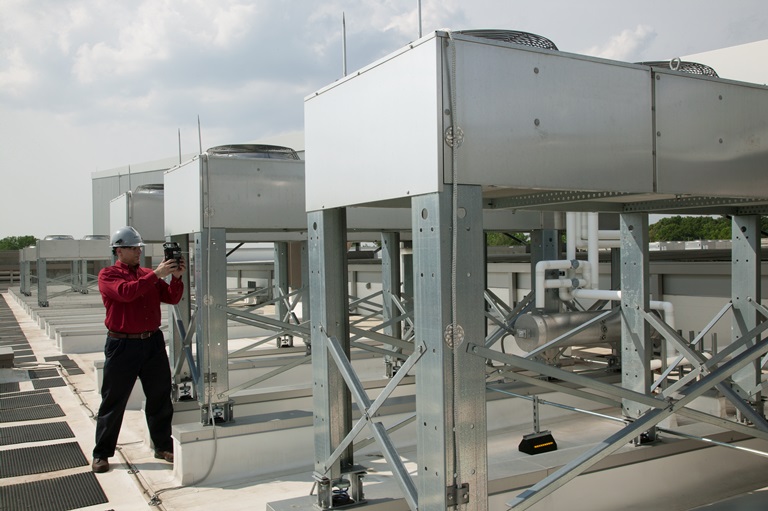
- Accelerate scheduled maintenance and service interventions: Extreme heat and poor air quality place the greatest burden on data center infrastructures. Electricity providers often struggle to meet the increased demand that comes from higher temperatures, and outages increase significantly. These events are certainly not the most appropriate time to ascertain problems with an uninterruptible power supply (UPS) or a cooling unit. Cleaning condenser coils and maintaining refrigerant charge levels are examples of proactive maintenance that can help prevent unexpected failures.
- Activate available efficiency tools: Many innovative UPS systems come with high-efficiency green modes that can reduce the amount of energy the system draws from the grid. Heat waves like the ones we've seen recently push the grid to its limits, meaning any reductions in demand can mean the difference between uninterrupted service and a devastating blackout.
- Leverage alternative energy sources: Not all data centers have access to alternative energy, but those that do should leverage off-grid energy sources. These could include on-site or off-site solar panels or other alternative sources, such as off-site wind systems and lithium-ion batteries, to enable shifting or peak shaving. The use of generators is not recommended during heat waves, unless a power outage occurs. Diesel generators produce more greenhouse gases and emissions associated with climate change than backup options that use alternative energy. In fact, organizations should postpone planned generator tests when temperatures soar.
“These heat waves are becoming more common and more extreme, putting intense pressure on service providers and data center operators globally,” said John Niemann, senior vice president for the global thermal management business at Vertiv. "Organizations must match the significant increase in energy demand to their response, proactively preparing for the associated strain not only on their power and cooling systems, but also on the grid. Prioritizing preventative maintenance service and working with electricity providers to manage demand can help reduce the likelihood of any type of heat-related equipment failure."
"This year again, some countries in Europe are experiencing record heat, and we see the impact on data centers in particular in our operations. Prioritizing thermal redundancy and partnering with a service provider with a widespread local presence and first-class recovery capability can make a difference in data center availability," said Flora Cavinato, Global Service Portfolio Director. “Rapid response times and proactive maintenance programs can help organizations support business processes by effectively optimizing their critical infrastructure.”
The published recommendations complement the previous guidelines by Vertiv, which included:
- Manage as many cooling units as possible to reduce the load on each individual unit and save energy through internal team controls
- Consider different types of systems cooling, including the liquid cooling, closed loop chilled water cooling and free cooling systems, all designed for high temperature environments.
- Use predictive modeling systems for thermal impacts instead of historical data. As the frequency of extreme heat events increases, historical metrics often fail to predict the risks of a modern economy.
For more information about data center power systems and cooling or business continuity and preventative data center maintenance in the event of extreme heat events, see www.vertiv.it