
It will be essential for operators to adopt best practices and collaborate with customers to amplify the efficiency of networks
Vertiv, (NYSE: VRT), a global provider of critical digital infrastructure solutions, presents research conducted with STL Partners on the importance of ensuring the efficiency and sustainability of 5G networks. The new research highlights that these networks will represent the most innovative communications technology of this generation, that they will enable a universe of new services (including advanced energy management features), but also that telecommunications operators will have to face several challenges.
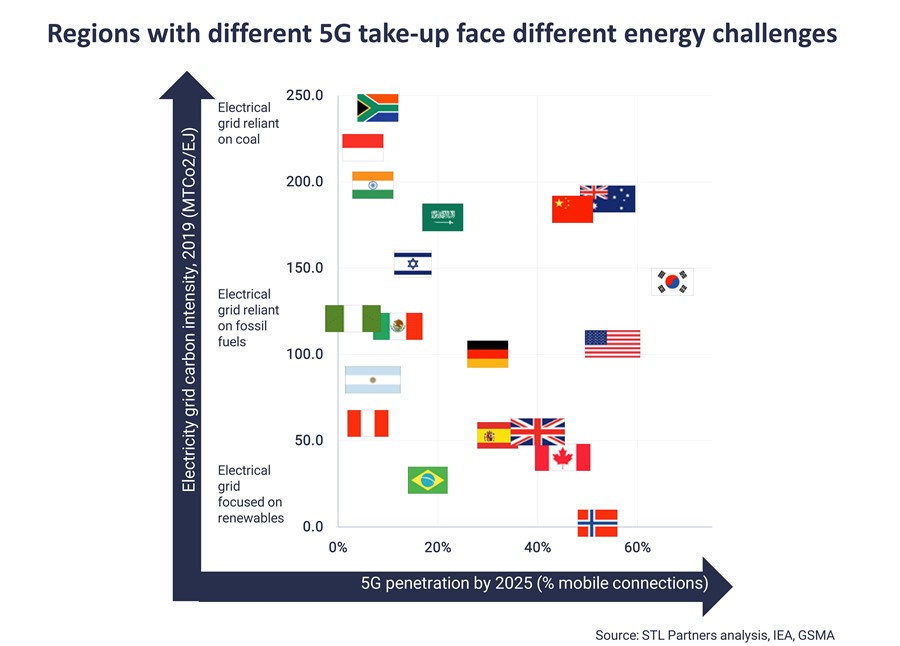
Forecasts suggest that 5G networks could be up to 90% more efficient per unit of traffic compared to 4G networks, despite requiring much more energy due to higher network density, heavy dependence on IT systems and infrastructure, increased network usage and accelerated traffic growth. In the report by STL Partners e Vertiv It states that telecom operators will be able to address these challenges in two ways: by adopting best energy efficiency practices across their networks and by encouraging their customers to use 5G-enabled services to reduce consumption and emissions in every social context.
STL Partners estimates that global 5G traffic will surpass that of 3G/4G networks as early as 2025, making sustainability an urgent priority for operators. In fact, 40% of companies surveyed indicated that energy efficiency should be the first or second priority for telecom operators when deploying 5G networks.
It carry over Why Energy Management is Critical To 5G Success uses research that, including a survey of 500 companies globally, outlines the challenges that Telcos face to counter the increase in energy consumption and costs associated with 5G. The document identifies some best practices aimed at containing these increases, dividing them into five categories:
- Network Technology: implementation of hardware and software designed to maximize efficiency
- Infrastructure: inclusion of new edge data centers to support cloud-native IT
- Infrastructure management: implementation of appropriate hardware and software to measure, monitor, manage, improve and automate the network
- Organization and valorisation: adopting a holistic and complete view of the life cycle, costs and investments across the network
- Collaboration: implementation of innovative and non-traditional standards and business models
“Telecom operators are making significant energy and cost reductions by evaluating entire ecosystems across network operations: people, goals, infrastructure and partners,” he said Scott Armul, Vice President for Global DC Power and Outside Plant di Vertiv. “Since 5G applications cannot be separated from IT, a high degree of collaboration between operators, OEMs, infrastructure providers and customers will be required to ensure that implementations are optimized and to achieve efficiency at every level.”
 5G as a tool for sustainability
The report makes clear that network efficiency improvements and best practices, while important, are only part of the energy puzzle that comes with 5G. These efforts must be paired with a more holistic approach aimed at reducing energy consumption and emissions and exploiting the capabilities of 5G in ways that are well beyond the control of the telco operator.
"Operators are deploying 5G networks to increase revenues. This growth will result from new connectivity and applications that enable customers and operators on their transformation journeys," he said Phil Laidler, Director at STL Partners. “To be credible and informed partners in the eyes of their customers, operators must set a good example and the energy strategy is an excellent starting point”.
Possible improvements
In terms of influencing customer behaviors to reduce energy consumption and carbon emissions, the report identified three sectors with significant potential for improvement through the use of 5G services. The manufacturing sector could realize up to $730 billion in profits by 2030 by using 5G to enable advanced predictive maintenance and automation. Transportation and logistics could achieve up to $280 billion in profits by 2030 through advanced driver assistance, connected traffic infrastructure and automated home deliveries. Finally, the report suggests that 5G could enable the healthcare sector to provide better access to services for a billion patients by 2030, ensuring greater use of resources, decreasing patient travel and increasing doctor productivity.
For operators who are committed to mitigating the environmental impact of 5G, it is essential to influence these behaviors, but there are still many steps to be taken. Only 37% of respondents said they considered operators to be credible partners in reducing carbon emissions, while 56% said they could become so in the future.
Further details, including ways in which Telcos can lead customers to use 5G sustainably by improving the efficiency of their networks, are available in the report published on Vertiv.com. On March 2, STL Partners will host a webinar on the topic with experts from Vertiv. To register at Clean Energy: Critical For 5G’s Success?, consult STLPartners.com/webinars. For more information on Vertiv's portfolio of solutions supporting 5G and energy efficiency, see Vertiv.com/5G-IT.