
Release 7.2 improves security with OAuth 2.0 support, increases control and recovery of Kubernetes workloads and ensures greater flexibility and efficiency in cloud deployments
Cohesity, a leader in security and data management based on artificial intelligence, has released the new version 7.2 of the platform in recent days Cohesity Data Cloud which brings a series of improvements in terms of speed, security, scalability and simplicity to help companies improve their ability to react to cyber attacks on their entire data assets.
As the number and severity of breaches in Europe continue to increase, companies must meet stricter regulatory requirements, such as DORA and NIS2 launched by the EU to stimulate greater cyber resilience. The new version of Cohesity Data Cloud has been enhanced with multiple features to allow enterprises to better manage this balance and comply with new constraints on all data, regardless of where it is located and even though the threats are unpredictable.
The most important innovations of the new version, available as self-managed software and SaaS, include improved security thanks to OAuth 2.0 support, more powerful control and recovery of Kubernetes workloads, and greater flexibility and efficiency when deployed on the three main cloud platforms: Amazon Web Services, Azure and Google.
"Companies must pay more attention to cyber resilience to respond to the increasing quality of attacks and new European regulations. In fact, it is very likely that a hacker will be able to infiltrate a network and therefore today it is more important than ever to contain the damage of the attack to have a minimal impact on the business", explains Mark Molyneux, CTO EMEA of Cohesity. "Cohesity Data Cloud 7.2 protects companies' most important data with an additional layer of security and recovery. This allows them to respond rationally and efficiently to the attack and reliably restore services and data. This is true cyber resilience."
OAuth 2.0 framework for stronger permissions and stronger security
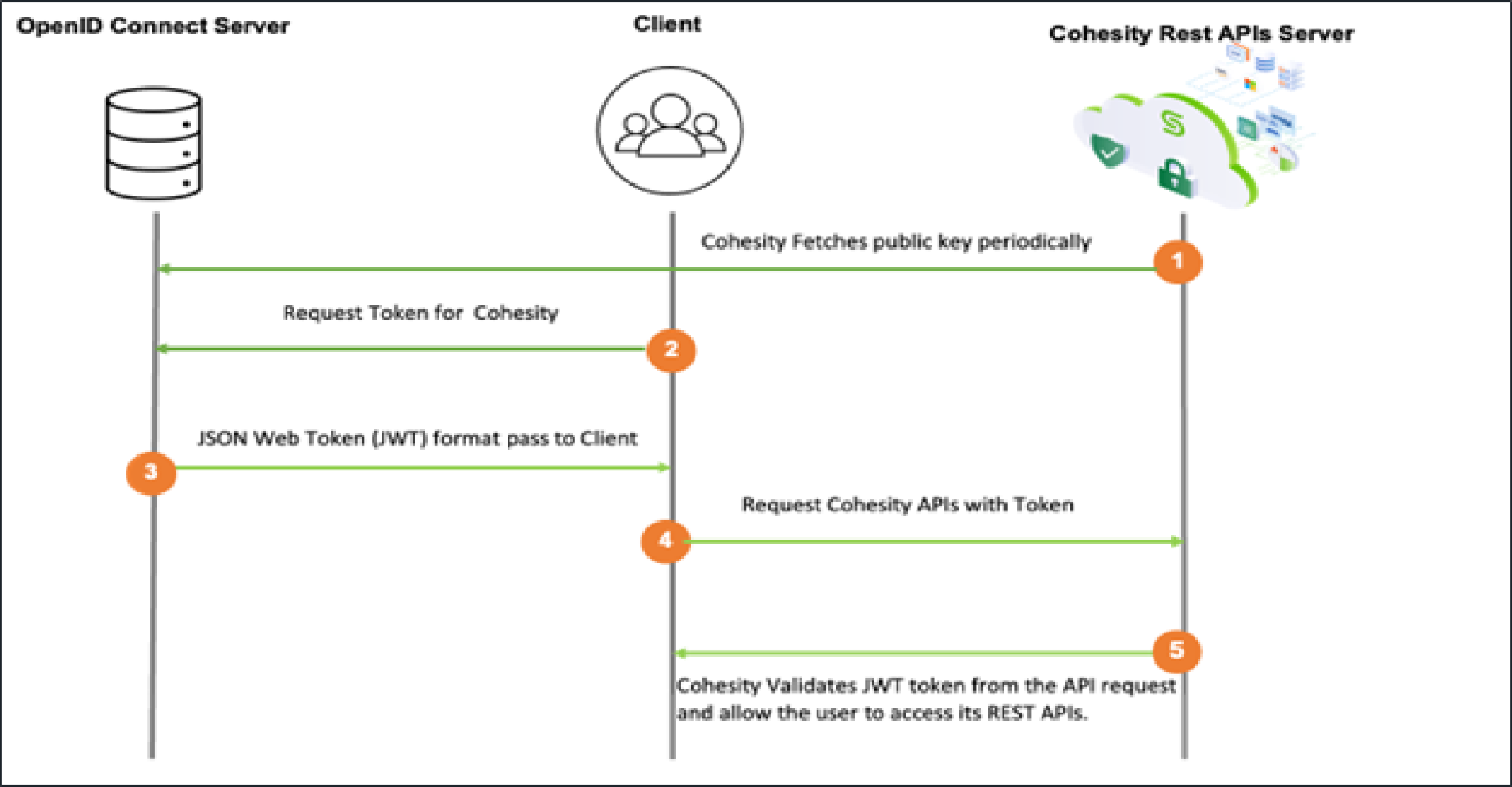
Cohesity's platform has long adopted “secure by design” principles and in this direction has improved the security of its platform with the OAuth 2.0 authorization framework in the cluster APIs. For users automating workflows with Cluster APIs, this offers three key benefits:
- Greater security: Reduce the risk of credential theft by using access tokens instead of sharing passwords
- Scalable integration- Makes it easier to securely connect automation scripts without compromising user data
- Improved session control- Allows administrators and security teams to centrally grant and revoke data access permissions from their identity provider, improving trust and compliance
Thanks to Auth 2.0 with OpenID Connect, access to Cohesity's REST APIs is authenticated without a password. While if organizations use an external identity management system like ADFS, they can use Single Sign-On (SSO) configuration features and add SSO user groups to their Cohesity clusters. By centralizing access controls and permissions management, companies can increase confidence and ensure compliance at all levels.
Greater control for backup and recovery in Kubernetes environments
Cohesity Data Cloud 7.2 includes additional powerful features for Kubernetes deployments, giving customers greater efficiency and control over backup and recovery workloads. In detail it provides:
- Dedicated VLAN support for Kubernetes: Enterprises can now configure separate VLANs for efficient data traffic management and create dedicated networks to route backup and recovery traffic seamlessly within the Kubernetes cluster. The feature improves performance and helps meet service level agreements (SLAs) for Kubernetes deployments;
- Granular PVC-level backup and restore for greater customization: Kubernetes administrators can enable/disable the inclusion of Persistent Volume Claims (PVC) within namespaces during backup and restore processes. In summary, the functionality allows you to dynamically select PVCs for backup, improving the effectiveness of your data protection strategy.
A right balance between practicality, control and costs
For organizations moving to the cloud for greater flexibility, accessibility and scalability, Cohesity Cloud Edition offers a robust solution to protect and manage data in the public cloud, as well as provide greater control over deployment by outsourcing management of the underlying infrastructure to cloud service providers. The new version of Cohesity Cloud Edition – available on the three major cloud platforms: Amazon Web Services, Azure and Google – integrates seamlessly with the control plane, so organizations can centrally administer all Cohesity clusters, regardless of where they run.
With this latest release, customers can achieve a lower total cost of ownership (TCO) and better performance by offering multiple configurations, up to 200 TByte per node, which simplify operations and reduce overall storage costs. Compared to previous versions of the cloud edition, the new version can help organizations achieve greater than 100% ingest throughput, require up to 50% fewer nodes per cluster, and reduce costs by up to 66% per terabyte.